
"why Africans don't drink coffee"
146000 article(s) found

Introduction to the processing method of Coffee picking and growing process
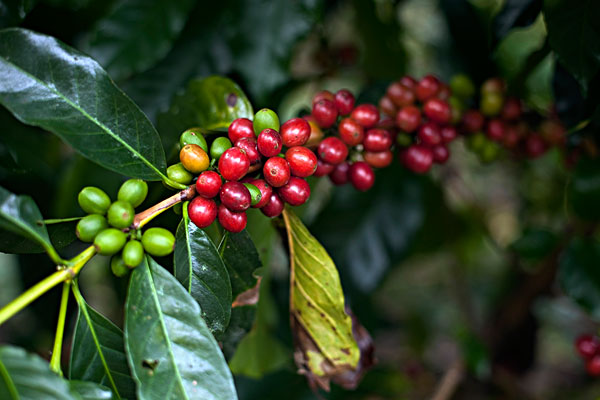
Introduction to the processing method of coffee picking and growth in Brazil, people have tried many times to use mechanical picking to reduce these costs. The machine can shake branches across the coffee tree so that the berries that become loose because they are ripe will fall into the funnel. The mechanical picker is only suitable in areas with better natural conditions, and it needs to be adjusted in advance, because only

Honduras Coffee Types Honduras Coffee Types
Arabica coffee trees originating in Ethiopia account for 70% of the world's coffee bean production; world-famous blue mountain coffee, mocha coffee, etc., are almost all Arabica species. Arabica coffee trees are suitable for high mountains with large temperature differences between day and night, and soil with low humidity and good drainage. The ideal altitude is 500 meters to 2000 meters. The higher the altitude, the better the quality.

A brief introduction to the Origin, Development, History and Culture of Fine Coffee beans in Renas Manor with balanced taste
Don't underestimate El Salvador's coffee production. In its heyday, it was once the fourth largest coffee producer in the world, but decades of civil war almost dragged down the coffee industry. fortunately, the war has stopped in recent years, and the coffee industry has come back to life. The only benefit that the civil war brought to the country of El Salvador was that the farmers left their fields barren and failed to catch up with the most popular Katimo sun-exposed cultivation train in the past two decades.

A brief introduction to the History and Culture of the Origin and Development of Fine Coffee beans in Renas Manor
Don't underestimate El Salvador's coffee production. In its heyday, it was once the fourth largest coffee producer in the world, but decades of civil war almost dragged down the coffee industry. fortunately, the war has stopped in recent years, and the coffee industry has come back to life. The only benefit that the civil war brought to the country of El Salvador was that the farmers left their fields barren and failed to catch up with the most popular Katimo sun-exposed cultivation train in the past two decades.

Coffee bean varieties and differences Introduction to the characteristics of the three native species of coffee See this simple and easy to understand
Professional coffee knowledge exchange More coffee bean information Please pay attention to coffee workshop (Weixin Official Accounts cafe_style) Front Street-Introduction of three major coffee varieties 1. Arabica Arabica beans, world-famous Blue Mountain coffee, mocha coffee, etc., almost all Arabica varieties. Appearance: small bean shape, long oval shape on the front, narrow and tortuous crack in the middle, circular arc shape on the back of bean

Robusta coffee with weak aroma and bitter taste describes the characteristics of grinding degree and introduces the taste of varieties in producing areas.
[Arabica] Coffee has a varied and broad potential flavor. Arabica coffee produced in different regions, different elevations and different climates usually has its own characteristics and can show a completely different flavor. "Arabica" coffee smells like grass when it is not roasted. After proper roasting, it shows a "fruity" aroma.

A brief introduction to the cultivation of boutique coffee beans in Renas Manor with balanced taste, geographical location, climate and altitude
Don't underestimate El Salvador's coffee production. In its heyday, it was once the fourth largest coffee producer in the world, but decades of civil war almost dragged down the coffee industry. fortunately, the war has stopped in recent years, and the coffee industry has come back to life. The only benefit that the civil war brought to the country of El Salvador was that the farmers left their fields barren and failed to catch up with the most popular Katimo sun-exposed cultivation train in the past two decades.

What are the types of coffee trees?
The shape of the bean is small, the front is long oval, the middle crack is narrow and tortuous, and the arc on the back of the bean is flat. Arabica coffee is grown in Brazil and Colombia in South America, Central America, Costa Rica in the Caribbean, Guatemala, Jamaica, Mexico and Ethiopia. Arabica coffee beans are large, uniform in size and glossy in color.

Gossip | Why don't Taiwanese like sour coffee?
The exchange of professional baristas Please pay attention to the coffee workshop (Wechat official account cafe_style) Taiwanese people do not like to drink coffee with sour taste, which is a common cognition, but the elegant aroma of pleasant sour and sweet taste, coupled with mellow and rich texture is really a great enjoyment in the world, both mentally and physically satisfied. In my experience, after correct teaching and providing high-quality coffee.

Species of coffee trees in Ethiopia
The Arabica coffee tree, which originated in Ethiopia, accounts for 70% of the world's output of coffee beans; the world-famous Blue Mountain Coffee and Mocha Coffee are almost all Arabica species. The coffee trees planted in Arabica are suitable for growing in high mountains with large temperature difference between day and night, as well as soils with low humidity and good drainage; the ideal altitude is 500m ~ 2000 m, and the higher the altitude is, the better the quality is.

What kinds of coffee trees do you have?
There are more than 6000 species of coffee trees, most of which are tropical trees and shrubs. There are four main coffee trees in the world, of which only two are of real commercial value and are planted in large quantities, and the quality of the coffee beans produced by other coffee trees is also higher than that of other coffee trees. The first is Arabica beans, which account for 70% of the world's output, the world-famous Blue Mountain.

One cup of coffee, one world.
The moment the sheep danced when they ate the coffee fruit, the aroma of the coffee conquered the human soul. Coffee, as the first of the two largest drinks in the world, was once the second largest trading commodity in the world besides oil. Even now, coffee is still the fourth most valuable agricultural product in the world. Of course, it's much more than that, except that we can get coffee (beans) from books to grow, make and sip.

Starbucks' conspiracy: why don't so many cafes make money?
For the exchange of professional baristas, please follow the coffee workshop (Wechat official account cafe_style), although it has not been long since you entered the coffee circle. But what I see and think, I have some ideas of my own. I'd like to share it with my friends who like coffee. All right, let's get down to business. More and more people have opened cafes in the past two years. At that time, the four tacky cities opened cafes, resigned and went to Xizang and Lijiang to open inns and ride.

What is the history or origin of Blue Mountain Coffee?
The shape of Arabica bean is small, the front is long oval, the middle crack is narrow and tortuous, and the arc on the back of the bean is flat. Arabica coffee is grown in Brazil and Colombia in South America, Central America, Costa Rica in the Caribbean, Guatemala, Jamaica, Mexico and Ethiopia. Arabica coffee beans are large, uniform in size and color.
China Coffee Network recommends coffee culture. why don't you like coffee?
In the classic Korean drama "the Man of Queen in-hsien", there is a short clip in which the hero and heroine use their spare time waiting for the plane to date in a coffee shop on Jeju Island. The heroine ordered green tea for the hero and cappuccino for herself, and then the hero and heroine said: hero: I don't understand why modern people like coffee. I tried it and didn't think it tasted good. Hostess: you're not used to it.

Coffee science knowledge: teach you three minutes to get to know coffee beans and master the most basic knowledge of coffee
Not long after they first come into contact with coffee, many people are confused by the mysterious and profound coffee culture. In a simple way, everyone knows what to drink at so-and-so, what size cup is the most cost-effective, and how to shock the cashier with an accurate sound order, but do you know where your coffee comes from on earth? What kind is it? And why does it smell like this? Last time, in the popular science post, I played.

What are the four main types of coffee trees?
Ethelsa species Ethelsa species is a variety discovered only in 1904, native to the Charlie River Valley in Africa, small fruit, high yield per plant, especially a drought-resistant variety. The product has strong flavor and slightly bitter taste. It is less cultivated in Liberia. Liberia is a large-grain species. It is native to Liberia in Africa and a few countries such as Malaysia. It's been cultivated longer

Varieties of coffee beans how long does it take for coffee trees to blossom
The Liberian species, the large seed species, is native to Liberia in Africa, as well as a few countries such as Malaysia. Its cultivation history is slightly shorter than the other two coffee trees. Liberian coffee trees are suitable for growing in lowlands. Its trunk is high and strong, it is 18 meters high, its leaves are large and tough, and its fruits and coffee beans are also very large. Its seed coat is close to the seed kernel and is scarlet when it is mature. Cited

The treatment of coffee originating from El Salvador coffee
The Arabica coffee tree, which originated in Ethiopia, accounts for 70% of the world's output of coffee beans; the world-famous Blue Mountain Coffee and Mocha Coffee are almost all Arabica species. The coffee trees planted in Arabica are suitable for growing in high mountains with large temperature difference between day and night, as well as soils with low humidity and good drainage; the ideal altitude is 500m ~ 2000 m, and the higher the altitude is, the better the quality is.

What is the roasting caramelization reaction of origin coffee?
The Arabica coffee tree, which originated in Ethiopia, accounts for 70% of the world's output of coffee beans; the world-famous Blue Mountain Coffee and Mocha Coffee are almost all Arabica species. The coffee trees planted in Arabica are suitable for growing in high mountains with large temperature difference between day and night, as well as soils with low humidity and good drainage; the ideal altitude is 500m ~ 2000 m, and the higher the altitude is, the better the quality is.